
Campbell County Multi-Day Arrest Log
Campbell County agencies publish no full multi-day arrest blotter. The official CCDC Current Inmates roster is a custody tool, not an archive. It shows someone booked days ago who is still held, but it omits anyone booked and released that same span. Federal and immigration detainee details stay hidden there too.
Several custodians hold the practical multi-day record. CCDC keeps the jail intake file. The arresting agency holds its incident material, and Campbell District or Circuit Court holds the case history and its outcome. A private archive can point to a date or agency, but it cannot certify custody.
Read Campbell Arrest Records by Date
Start with the most authoritative record and work outward. Keep custody, booking, incident, and court outcome as separate facts.
- Check CCDC Current Inmates for present public custody and note the time of access.
- Use the date and agency filters on a secondary county archive only to develop a lead.
- Ask the named arresting department for its report when the incident details matter.
- Use Campbell County courts for the case number, orders, and final disposition.
- For an older jail record, submit a narrow written request to CCDC with the name and approximate booking date.
The 24 Hour Arrests page covers fresh intake. A log search instead works backward across dates and checks whether a copied entry still matches official records.
Campbell Arrest Log Entry Fields
Fields vary by source. CCDC's current roster confirms a photo and bond relationship, while private archives expose more dates, agency names, and physical details. Copied fields can be stale.
| Field | Use | Verification |
|---|---|---|
| Name | Match a person | Check similar names |
| Booking date and time | Place an entry in the range | May reflect feed timing |
| Agency | Route a report request | Confirm with that department |
| Charge | Record the booked charge | Check court disposition |
| Bond | Show a release term or amount | Not a sentence |
| Photo | Identify an intake entry | Not evidence of guilt |
CCDC warns that its own data is not guaranteed. That warning weighs even heavier on entries copied by private publishers.
Campbell Weekend Arrest Log Limits
No county source promises a Friday-through-Sunday report or a Monday upload. Holiday posting times go unlisted too. A private timestamp may mark the arrest, the booking, the import, or the publication, and those are different events. Weekend transport can finish before a third-party page refreshes.
Search a date range wider than the expected day. Compare any lead with CCDC and the arresting agency. Someone already released may leave the live roster blank even though a booking file exists. That blank does not mean no arrest happened.
Campbell Arrest Archives and Retention
Kentucky's County Jailer Records Retention Schedule sets destruction of the jail register and inmate record file five years after release, subject to legal holds and access limits. Daily jail logs share that five-year period. So do special reports. Non-evidentiary booking video or audio may last far less. Evidentiary recordings stay through the investigation or any legal action.
Retention does not mean online display or public release. Ask which record series holds the item. It may sit with CCDC, move to another custodian, or be lawfully destroyed. A good request names the person, the approximate date, the agency, and the exact record, like a booking sheet or intake photo.
The official Campbell County court route offers the next step toward a disposition.
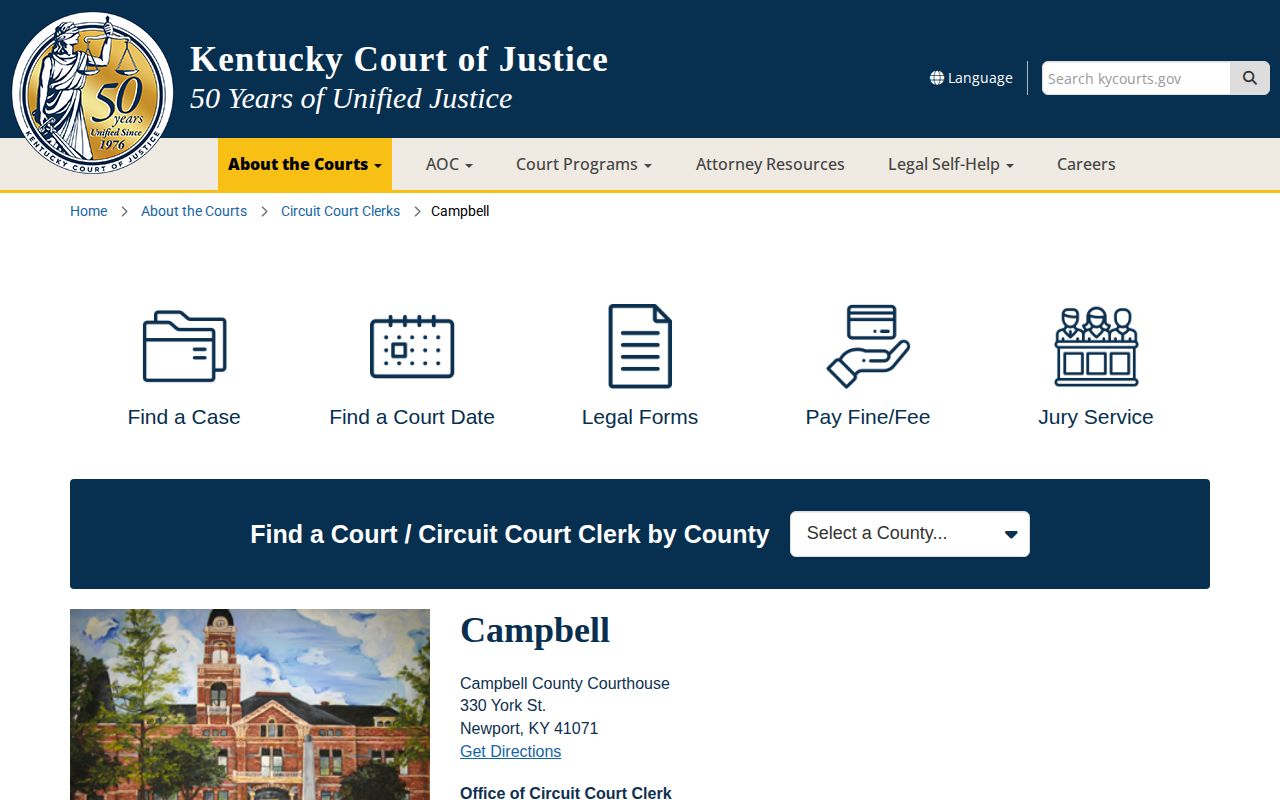
A court record shows what a booking archive cannot. It captures later orders and the final outcome of the case.
Note: The web roster has no published archive period, so its visibility window must not be equated with agency retention.
Campbell Secondary Arrest Archives
Beyond official channels, RecentlyBooked's Campbell page describes a rolling last-30-days list with pages, booked dates, photos, and an update time. Busted Newspaper's Campbell archive reaches farther back through dated pages and agency labels. Arrests.org adds date, city, and agency filters. Each source is unofficial. Each may keep an entry after release.
Treat these as discovery aids for a likely date and custodian. CCDC still rules on current custody. The clerk still holds the disposition. Busted Newspaper's archive shows how broad that date coverage can be.
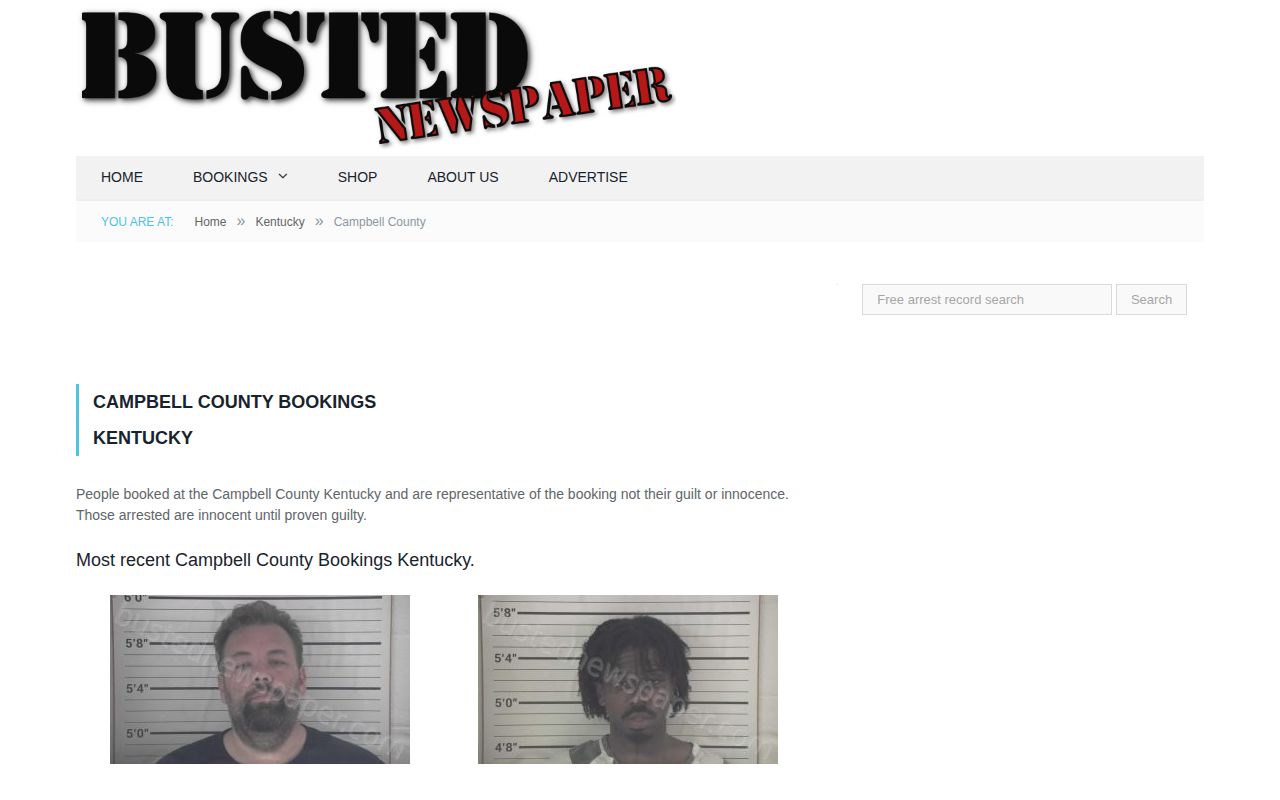
Its long reach aids discovery, not proof of custody.
Campbell Arrest News Is Selective
A local newsroom is not a booking log. LINK nky's Campbell County Police tag gathers selected investigations, arrests, officer news, and safety projects. It puts all of it in one place. Its CCDC and drug tags pull together detention and investigation stories the editors chose to cover. NKyTribune keeps a sheriff department tag too. Expect occasional multi-agency pieces there, not one story per booking.
Photographs need care. A news photo may show a scene, a file image, or an agency handout. It may not be a booking photo at all. Keep the outlet's date and wording intact. Weigh any arrest claim against official agency and court records before you rely on it.
Agencies also publish administrative reports that are easy to mistake for a name-by-name arrest roster. Fort Thomas posts monthly and annual police reports. The Campbell County Sheriff's Office goes back to 2018 with monthly reports. Those documents reveal agency work and broad trends, but they never list everyone booked into CCDC. Newport and Alexandria take a similar path, offering police information and records routes with no daily booking-photo section.
Labels matter when an archive names an agency. Route your request by that label, then confirm it. CCDC books arrestees for every police agency in Campbell County. That means the jail file and the incident report can sit with different offices. The sheriff and Campbell County Police are separate agencies as well. Send a request to the wrong custodian and even a correct name and date will stall.
For a certified result, go to the record custodian instead of trusting an archive screenshot. Save the source URL, the access date, the agency label, and the displayed booking date. Cite the record later without republishing a face. If the office says files moved to storage, ask for the record-series name and locator details. Do that before you contact the Kentucky Department for Libraries and Archives.
The NKyTribune sheriff archive capture shows the editorial format.

The screen demonstrates selected coverage, not a complete county arrest log.